PEPTIDE CHARACTERIZATION

Peptide testing & characterization.

Chromatography, peptide mapping, mass spectrometry and amino acid analysis. Start with the question you need your sample to answer.

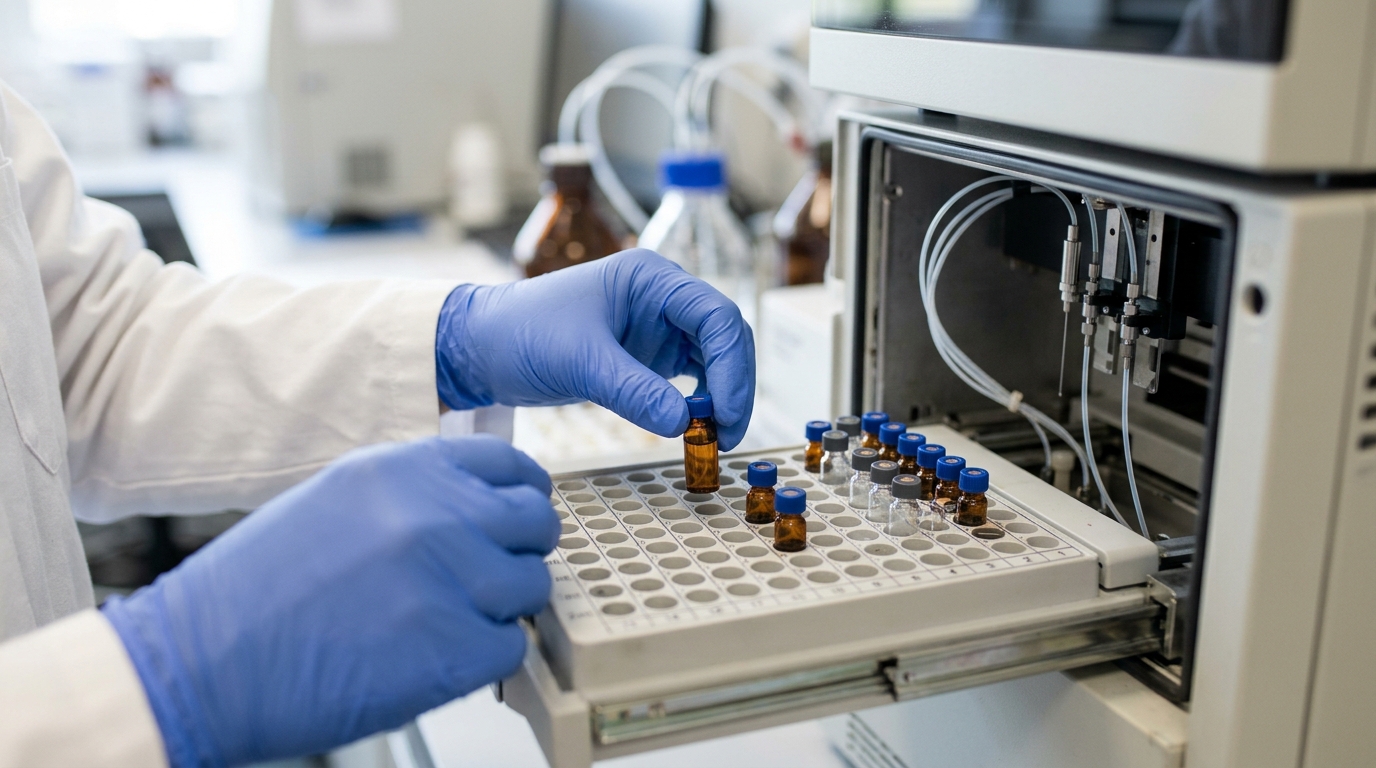
Gloved scientist loading a capped sample vial into an HPLC autosamplerPEPTIDE TESTING
ANALYTICAL APPROACH

A focused approach to your sample.

01

Peptide mapping

Investigate primary structure and post-translational modifications.

02

Chromatography

Discuss reversed-phase HPLC and other separations suited to your sample.

03

LC-MS/MS

Explore peptide bioanalysis and project-specific mass spectrometry applications.

04

Amino acid analysis

Add composition information to your characterization program.

METHODS & INTERPRETATION

Connect your peptide question to the measurement

Peptide characterization starts with the attribute you need to understand: chromatographic profile, molecular mass, sequence information or amino acid composition. The sequence, modifications, formulation and available reference material help determine the approach. Define each requested measurement and its reporting basis before comparing samples or supplier data.

Analytical questionApproach to considerWhat the report explains
What does the chromatographic profile show?Reversed-phase HPLC can separate the main component from resolved related peaks under a defined method.Chromatogram, retention times and integrated peak areas, with the detector and integration basis identified.
Is the observed mass consistent with the proposed molecule?Mass spectrometry can compare measured mass with the value expected from the sequence and declared modifications.Observed and expected mass, mass difference and relevant acquisition or interpretation notes.
Which parts of the sequence or modifications are supported?Peptide mapping and suitable MS/MS experiments can investigate sequence regions and selected modifications.Assigned fragments or mapped peptides, coverage where applicable, and any unresolved regions.
What is the amino acid composition?Amino acid analysis examines a prepared hydrolysate using an appropriate calibration and interpretation scheme.Amino acid quantities or ratios, calculation basis and preparation limitations.
BEFORE YOU SHIP

A well-prepared sample starts with context.

Share the details below so the analytical scope, handling and reporting can be agreed before work begins.

Plan your submission
  1. 01

    Provide the sequence, molecular form, terminal modifications and counter-ion information where known.

  2. 02

    Describe powder or solution format, concentration estimate, buffer, excipients and previous handling.

  3. 03

    Share the specific question, prior chromatograms or reports, available reference material and lot identifiers.

RESEARCH PEPTIDE TESTING

A clear starting point.

Choose a focused HPLC panel or a broader set of quality measurements.

FOCUSED PANEL

HPLC Panel

$200per sample · USD

A focused view of the chromatographic profile.

  • Retention-time comparison for identity
  • Chromatographic purity assessment
  • Quantitative content measurement
Discuss this panel

Additional services

Additional HPLC conformity sample
$50 each
COA with an additional brand
$100 each
Rush reporting · 3 business days
$150 each

Rush availability must be confirmed. Timing begins after sample receipt; the receipt date is Day 0.

Single-order volume savings

5%15–29 samples
10%30–49 samples
20%50+ samples

Quantities are counted within one order. Additional-service charges are confirmed in the quotation.

Standard new-account pricing; existing account rates may differ. Confirm sample acceptance, method suitability and the final quotation before shipping. Research use only.

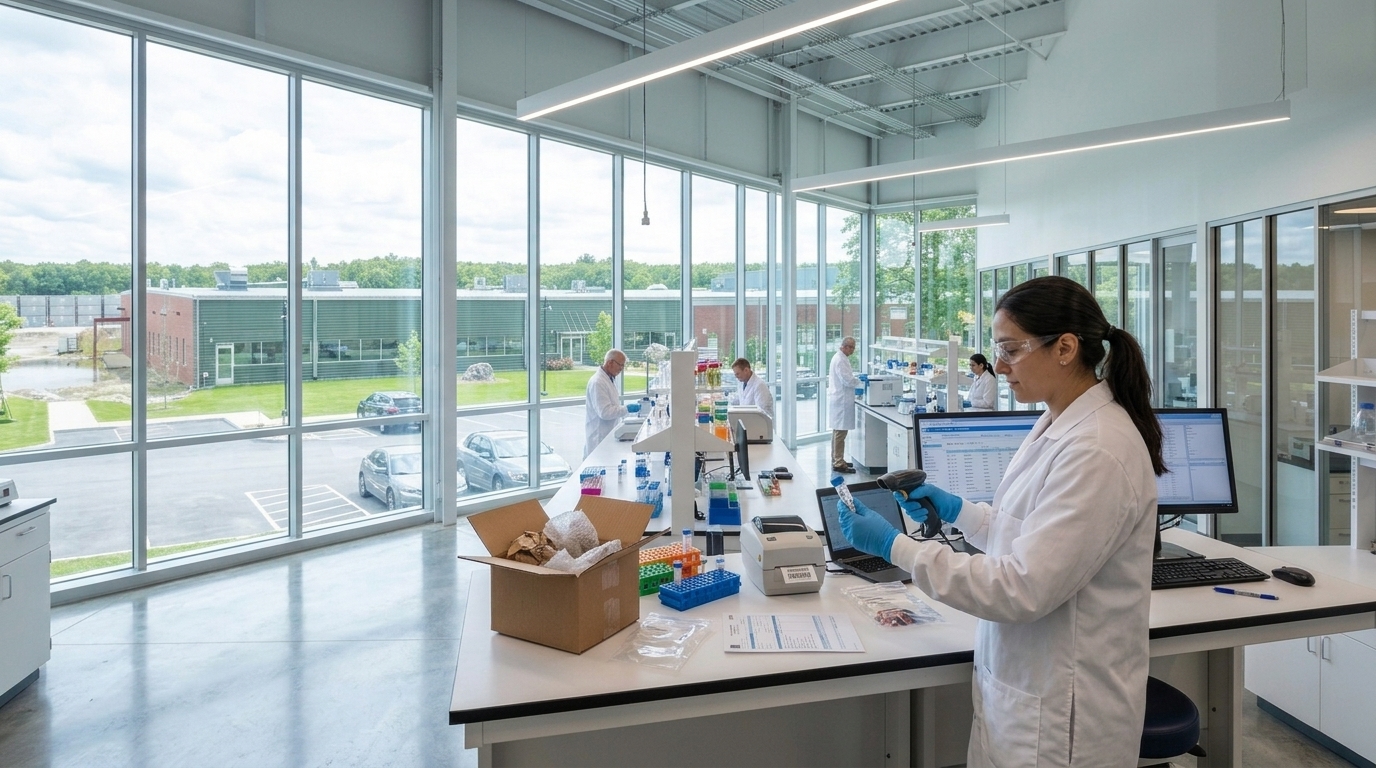
Technician scanning a sealed sample vial at a laboratory receiving workstation
A WELL-DEFINED START

The sample.
The question.
The right next step.

A useful project starts with context. Share the material, existing data and the decision your analysis needs to support.

  • Sample identity, format and available quantity
  • Requested methods and analytical objectives
  • Reporting needs and project considerations
Start a project conversation
COMMON QUESTIONS

Before your analysis.

Does an HPLC area percentage tell me the peptide content?

An area percentage describes the relative detector response of integrated peaks under that method. A content measurement needs its own calibration, calculation and reporting basis. Request both explicitly when both are required.

Can a mass match establish the entire sequence?

A matching mass supports consistency with a proposed molecule. Sequence-specific questions can require fragmentation, mapping or another complementary approach, particularly when different structures share similar masses.

How much sample should I prepare?

Quantity depends on the requested analyses, concentration, preparation losses and any repeat work. Confirm the analytical plan and sample requirements before shipping rather than applying one minimum to every project.

Let’s talk about your next project.

Bring your analytical question. Let’s define the next step.

Discuss your project