Begin with the information you need
Method selection starts with the question. A chromatographic profile, a concentration measurement and evidence about molecular identity are different deliverables. List the target compounds, matrix, expected range and comparison before asking for a platform by name. The desired result determines which preparation, separation and detection choices need discussion.
Understand the role of chromatography
Liquid chromatography separates components according to how they interact with the chromatographic system. The resulting profile depends on the column, conditions, preparation and detector. A retention time or peak area has meaning within that procedure. Comparing profiles is most useful when those conditions and evaluation rules are known.
Understand what mass detection adds
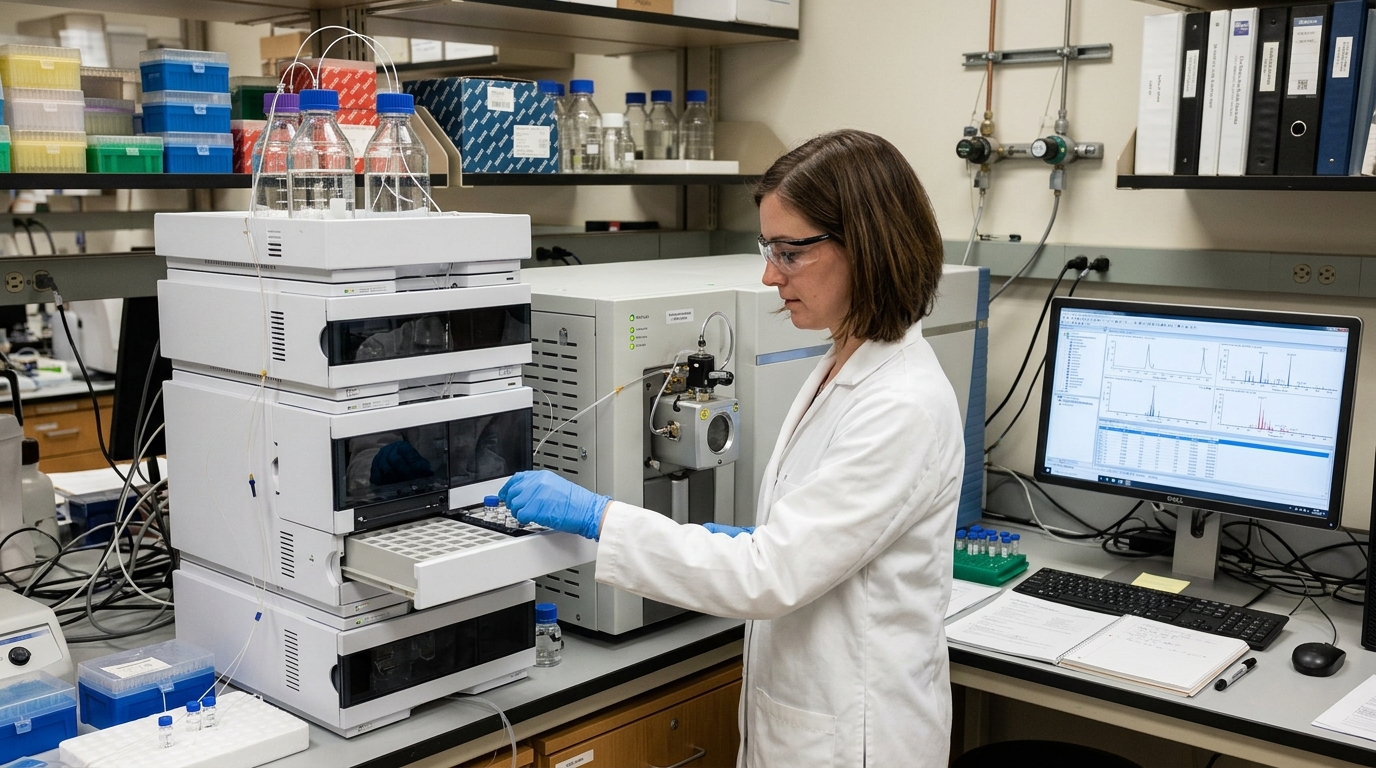
LC-MS adds mass-to-charge measurements to chromatographic separation. This can provide evidence about an expected molecule or help investigate related components. Tandem mass spectrometry can add fragmentation information. The strength of an assignment depends on the experiment and supporting evidence; an observed mass should not be presented as complete structural proof.
Separate a profile from a quantitative result
Relative peak areas describe detector responses under a stated method. Reporting concentration or content requires an appropriate calibration and calculation, with preparation and matrix effects considered. Ask how the measurement is calibrated, which units are used and what range is supported. These details make the result easier to compare and reuse.
Prepare a decision-focused method brief
Include the proposed analyte, formulation, expected concentration, prior data and available reference material. Explain whether the objective is routine comparison, targeted quantitation or investigation of an unknown. A method discussion can then focus on the evidence required and the limits of the proposed output rather than assuming one platform answers every question.
Bring the question to your project.
Explore the relevant analytical capabilities or start a conversation about your sample.
Explore the approach