
Microbiology & endotoxin testing.
Discuss your sample matrix, application and microbial testing requirements before defining a project.
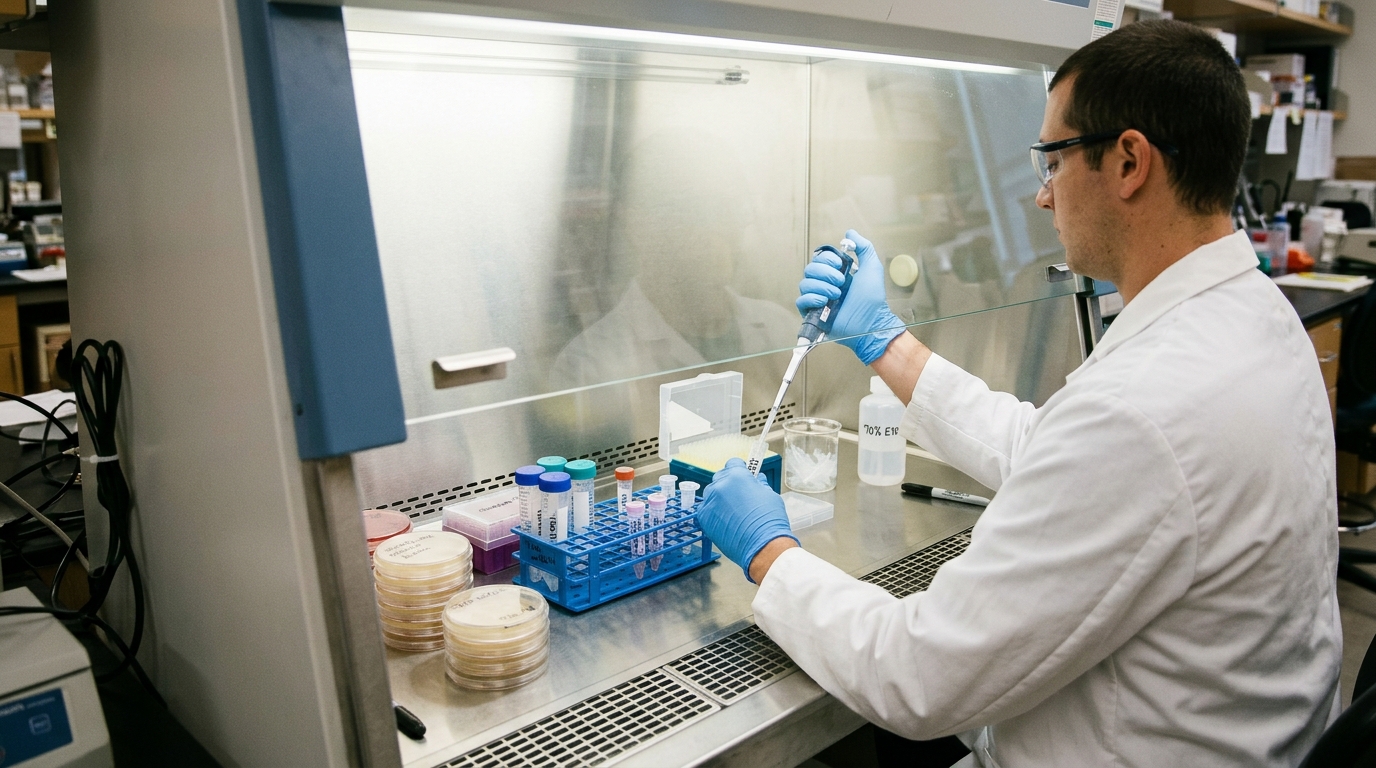 MICROBIOLOGY
A focused approach to your sample.
Sample context
Formulation, packaging, material quantity and handling considerations.
Testing objective
Identify the microbial quality question or specification to investigate.
Method suitability
Include requested method references and known matrix limitations.
Reporting
Define results, units and documentation requirements.
Define the microbiological information you need
Microbial-quality inquiries need a clear target and sample context. Measuring bacterial endotoxins, estimating recoverable microorganisms and investigating specified organisms answer different questions. Share the formulation, intended study and requested procedure so that method suitability, sample handling and report interpretation can be discussed before a testing scope is agreed.
| Analytical question | Approach to consider | What the report explains |
|---|---|---|
| Is bacterial endotoxin the attribute of interest? | Discuss an appropriate endotoxin procedure, matrix-interference assessment and the required reporting basis. | An endotoxin result with units, tested dilution and the procedure's reporting limits. |
| Is the question about recoverable microorganisms? | Discuss the requested enumeration method, sample preparation and recovery controls for that material. | Counts relative to a defined sample quantity, together with method and detection-limit information. |
| Is a particular organism or target panel specified? | Identify the organisms or molecular targets and ask which identification or detection approach fits the question. | A result tied to the named targets, sample preparation and limitations of the selected approach. |
| Could the formulation interfere with the procedure? | Consider preservation, pH, surfactants and other components when planning suitability or interference checks. | Documented control observations and any restrictions on how the sample result can be interpreted. |
A well-prepared sample starts with context.
Share the details below so the analytical scope, handling and reporting can be agreed before work begins.
Plan your submission- 01
List the formulation components, preservatives, physical form and packaging.
- 02
State whether the request concerns endotoxin, organism counts, specified targets or another attribute.
- 03
Provide the intended sample use, requested method, comparison criteria and available quantity.

The sample.
The question.
The right next step.
A useful project starts with context. Share the material, existing data and the decision your analysis needs to support.
- Sample identity, format and available quantity
- Requested methods and analytical objectives
- Reporting needs and project considerations
Related testing & guidance.
Before your analysis.
Does a low endotoxin result describe the microbial count?
Endotoxin and microorganism measurements address different attributes. Select and interpret each procedure according to its target rather than using one result as a substitute for the other.
Why does the laboratory need the ingredient list?
Ingredients can suppress organism recovery or alter an assay response. Matrix information helps determine preparation and controls and whether the planned measurement is suitable.
Does a screening result establish sterility?
The conclusion must match the procedure and its validated scope. A result for a particular organism panel or molecular target should be reported as that result, with its limitations, rather than expanded into an unsupported claim.
Let’s talk about your next project.
Bring your analytical question. Let’s define the next step.