
Raw material & API analysis.
Discuss incoming-material questions, supplier information and analytical requirements.
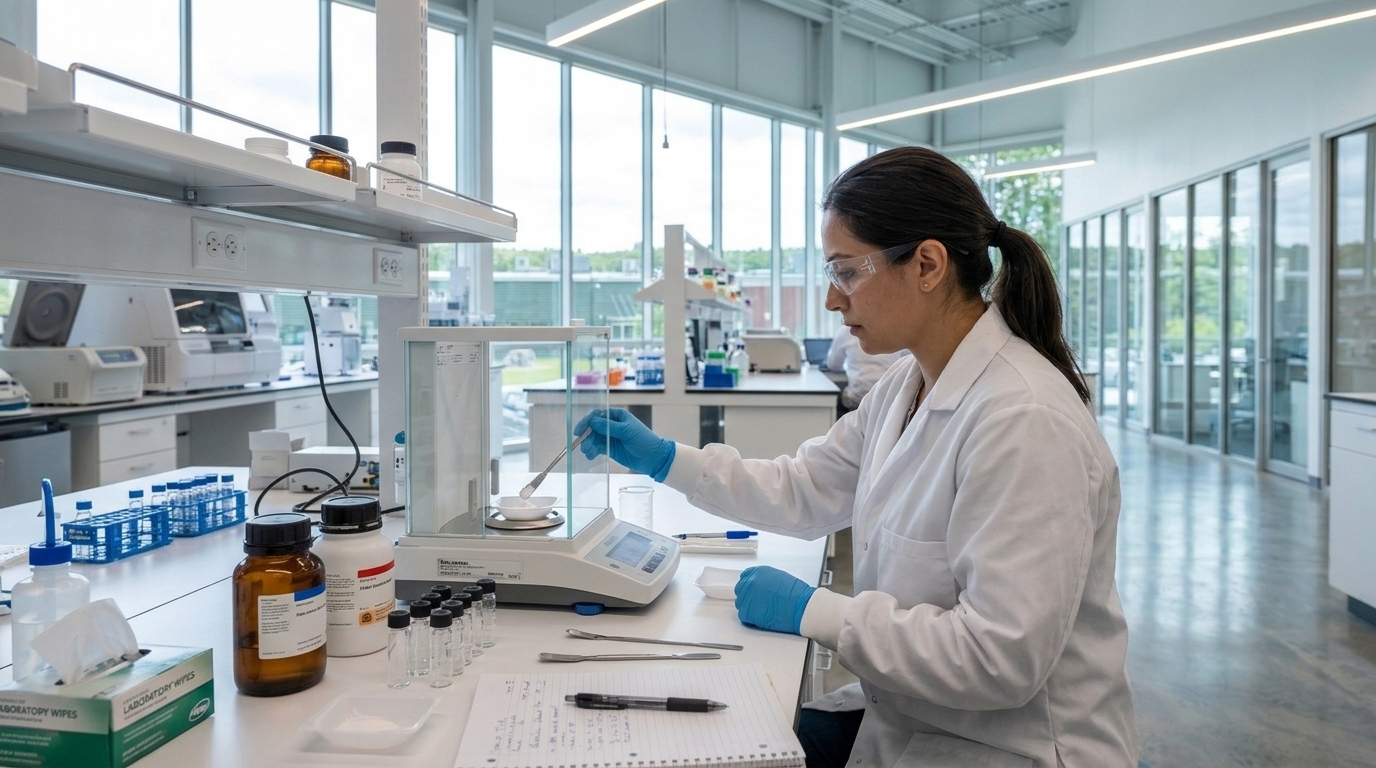 RAW MATERIALS & APIS
Start with what you need to know.
Material information
Identity, composition, physical form and source documentation.
Analytical comparison
Frame questions against specifications and reference data.
Impurity questions
Identify compounds of interest and process context.
Method suitability
Review established methods or development needs.
Make an incoming-material comparison specific
Incoming-material investigations begin with a precise description of the material and the question raised by its documentation or performance. Supplier reports, specifications and reference information help define the comparison. Distinguish identification, content and impurity questions so that each result is connected to an appropriate method and basis.
| Analytical question | Approach to consider | What the report explains |
|---|---|---|
| What evidence supports the proposed material identity? | Review the material description and discuss comparison with an appropriate reference or characterization approach. | The evidence used for the identity assessment and the scope of the conclusion. |
| Does a measured component match the specification? | Define the analyte, calibration basis, sample preparation and criterion before measurement. | A result with units and sample basis alongside the agreed specification, when applicable. |
| What explains a difference from supplier data? | Compare methods, reporting conventions, preparation and sample history before interpreting numerical differences. | A documented comparison that separates measurement differences from possible material differences. |
| Which process-related compounds need investigation? | Name known or suspected targets and discuss a method appropriate to their chemistry and expected levels. | Targeted observations or quantitative results with method-specific reporting limits. |
A well-prepared sample starts with context.
Share the details below so the analytical scope, handling and reporting can be agreed before work begins.
Plan your submission- 01
Provide the supplier material name, lot number, specification and available certificate or analytical report.
- 02
State the incoming-material question and identify any unexpected observation or process change.
- 03
Include composition, physical form, storage history, expected target levels and relevant safety documentation.

The sample.
The question.
The right next step.
A useful project starts with context. Share the material, existing data and the decision your analysis needs to support.
- Sample identity, format and available quantity
- Requested methods and analytical objectives
- Reporting needs and project considerations
Related testing & guidance.
Before your analysis.
Is verification of a supplier certificate just a document check?
It can mean different things. Specify whether you need an authenticity review, a comparison of reported information or independent analytical measurements.
Why can two certificates show different values for the same material?
Differences can arise from the sample, preparation, calibration, units or reporting basis. Those details need review before assigning a cause.
What helps an impurity investigation?
Known process reagents, expected by-products, prior profiles and reference material make the question more specific. A targeted investigation and an open-ended unknown search require different scopes.
Let’s talk about your next project.
Bring your analytical question. Let’s define the next step.