
Chemical analysis & chromatography.
Bring chromatography and spectroscopy together to investigate your sample and inform the next stage of development.
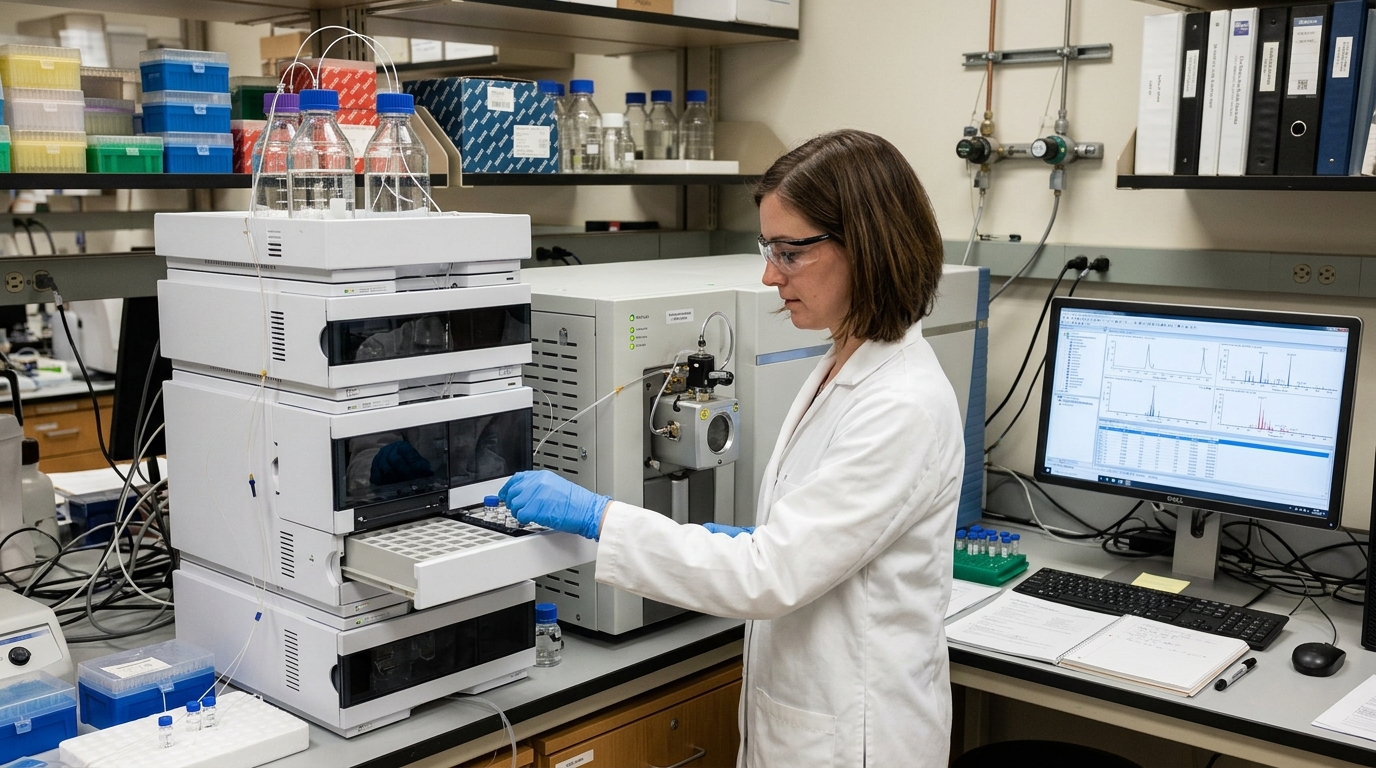 CHEMICAL ANALYSIS
A focused approach to your sample.
Chromatographic separation
Reversed-phase, size-exclusion, ion-exchange and hydrophobic-interaction approaches.
Spectroscopic analysis
UV/Vis, fluorescence and mass spectrometry applications.
Product impurities
Define the compounds of interest, matrix and required reporting information.
Residual analysis
Share target compounds and existing methods to establish the project scope.
Choose an approach around the chemical question
Chemical analysis connects a material's composition with a defined analytical question. Chromatography separates components; detector selection determines which signals can be measured. A useful project brief identifies the target compounds, sample matrix, expected range and intended comparison so that the method and reporting units fit the decision.
| Analytical question | Approach to consider | What the report explains |
|---|---|---|
| How do the components separate? | Discuss reversed-phase, size-exclusion, ion-exchange or hydrophobic-interaction chromatography according to the material. | A chromatographic profile with the separation conditions and relevant peak observations. |
| How much of a named compound is present? | A quantitative method uses suitable reference material, a calibration model and sample preparation appropriate to the matrix. | Concentration or content with units, dilution factors, calibration basis and applicable reporting range. |
| What information could explain an unfamiliar peak? | Chromatographic behavior, UV/Vis or fluorescence response and mass spectrometry can supply complementary evidence. | Observations or proposed assignments with the level of supporting evidence and remaining uncertainty. |
| How do related batches compare? | Analyze comparable preparations with a consistent method and agreed evaluation rules. | Side-by-side profiles or tabulated measurements, with differences interpreted in the method's context. |
A well-prepared sample starts with context.
Share the details below so the analytical scope, handling and reporting can be agreed before work begins.
Plan your submission- 01
Identify the compounds or attributes of interest and give an expected concentration range if available.
- 02
Supply formulation ingredients, solvents, buffers, known interferences and relevant safety information.
- 03
Include any existing method, reference standard details, specifications and example reports.

The sample.
The question.
The right next step.
A useful project starts with context. Share the material, existing data and the decision your analysis needs to support.
- Sample identity, format and available quantity
- Requested methods and analytical objectives
- Reporting needs and project considerations
Related testing & guidance.
Before your analysis.
Is a chromatographic peak automatically identified?
Retention time alone is one observation. Identification depends on the method, reference comparison and any supporting evidence. Unknown peaks may need additional investigation before an assignment can be made.
Can an existing method be used for a new formulation?
A change in matrix can affect preparation, recovery, separation and detector response. Review the changed ingredients and intended range before assuming the procedure transfers directly.
How should results from different methods be compared?
Check sample preparation, detector, calibration, units and integration rules first. Two reported values can describe different measurement bases even when the test names appear similar.
Let’s talk about your next project.
Bring your analytical question. Let’s define the next step.