
Describe the ingredient or finished product
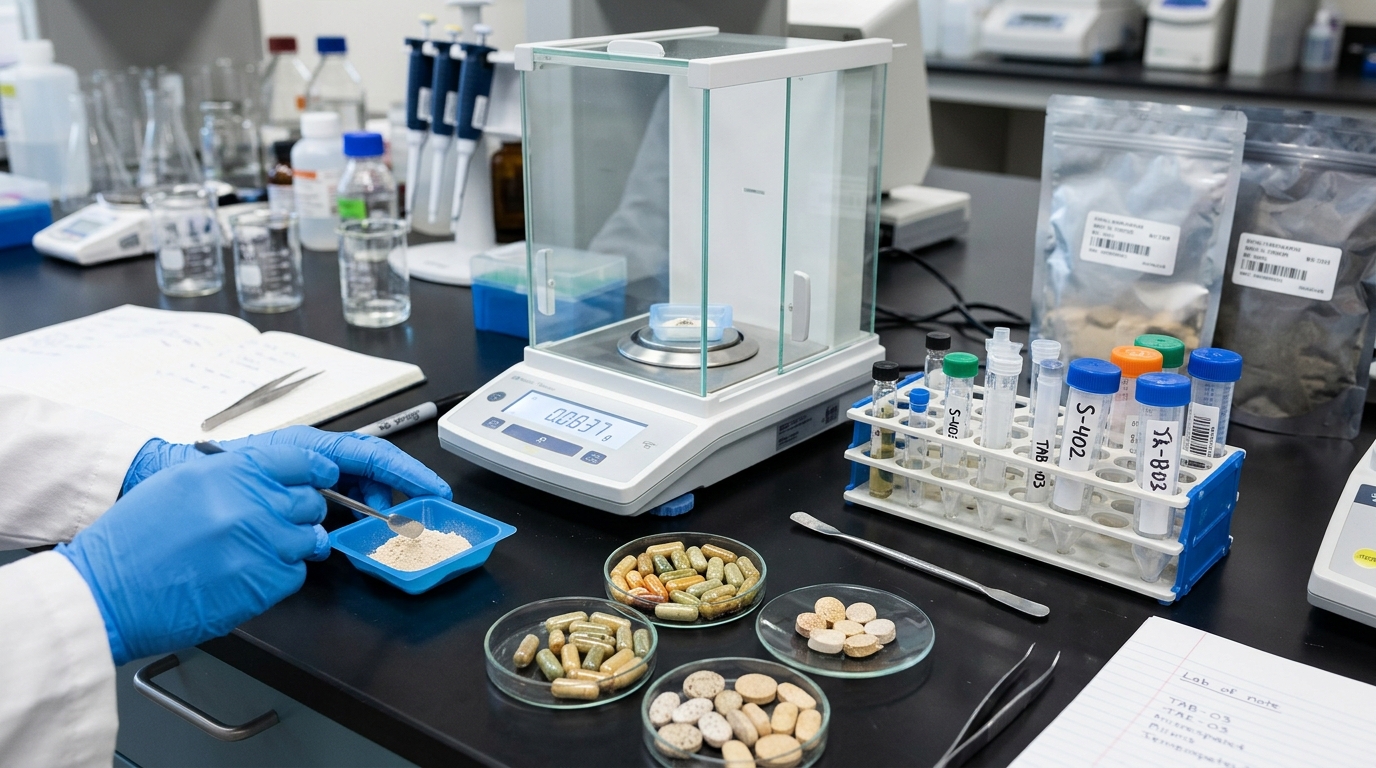
A useful supplement brief identifies whether the sample is a raw ingredient, blend or finished dosage form. Include the ingredient list, physical format, lot number and relevant label information. This gives the laboratory context for preparation and makes it clear which material the requested result will describe.
Turn broad quality language into measurements
Identity, content and contaminant questions should be listed separately. Name the component or attribute of interest and explain the decision the data should support. An undefined request to test everything leaves the scope unclear; a focused list makes method selection and the resulting report easier to assess.
Provide the specification and reporting basis
For each requested attribute, include any relevant criterion, its source and the intended units. A result per gram, per unit or per volume has a different basis and may require additional preparation or calculation. Resolve these details before comparing the result with a label statement or supplier document.
Share information that affects preparation
Formulation ingredients, coatings, oils and other matrix components can affect extraction and measurement. Provide existing methods, known solubility issues and prior reports where available. If several lots or formulations are being compared, describe what changed and keep the intended comparison consistent across the sample set.
Plan a report that answers the original question
Agree on sample identifiers, measured attributes, units, method references and any comparison that should appear. Request the information needed to understand the result without expanding it into a broader product conclusion. Confirm sample quantity and handling through the actual project plan before arranging shipment.
Bring the question to your project.
Explore the relevant analytical capabilities or start a conversation about your sample.
Explore the approach